Search Any WV Parcel, Tax Ticket or Deed
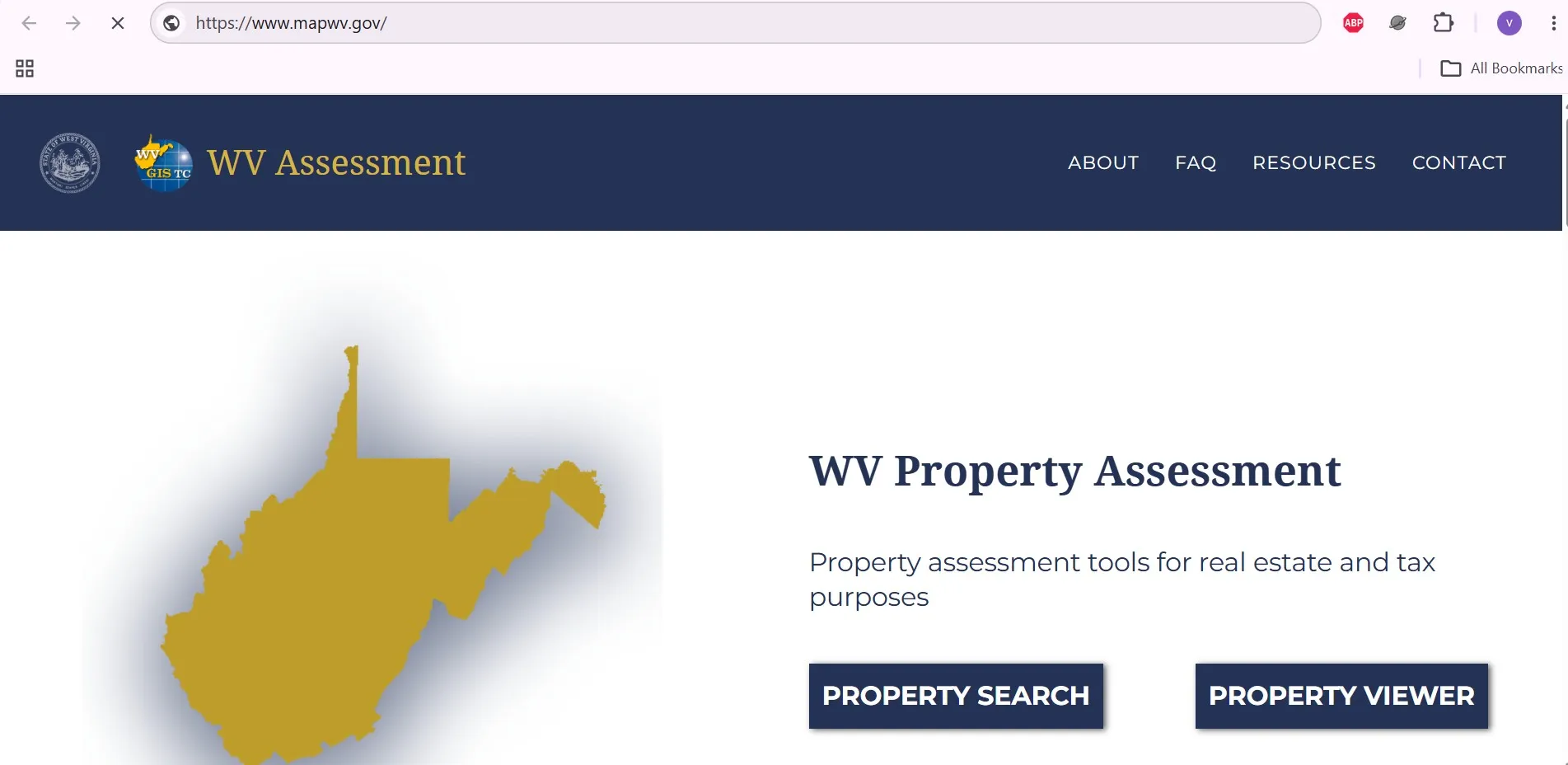
Search West Virginia real-estate records by county, owner name, street address or parcel number, then review appraisal values, property class, acreage, district, map details and available sales information.
This guide also explains which office fixes an assessment, collects the tax ticket, records the deed or handles certified delinquent land—so users are not sent to a generic “county auditor” page that cannot complete the task.
Quick answer: use the statewide assessment search first
Select the county in the official WV Real Estate Assessment search, enter one owner, street or parcel clue, open the matching record and use its GIS link. Then contact the County Assessor for record errors, County Sheriff for ordinary tax payments, County Clerk for deeds, or State Auditor for property certified to the state.
Ten quick West Virginia property facts
After preparing the correct county and one search value, open the statewide assessment database. Start with Basic search; use Appraisal/Sales or Advanced only when you need value ranges, sales dates, deed book/page, acreage, building year or legal-description criteria.
Choose the exact property task
This guide is organised around actions rather than a directory of unexplained links.
Who handles each West Virginia property task?
What you need |
Correct office or tool |
What it handles |
Important limit |
|---|---|---|---|
Owner, assessment or property class |
County Assessor |
Discovers, lists and values local real and personal property. |
Does not ordinarily collect the tax payment. |
Statewide parcel lookup |
WV Assessment Search |
County, owner, street, parcel, appraisal, sale and advanced searches. |
Data errors must be corrected by the local Assessor. |
Parcel location or aerial map |
WV Property Viewer |
E-911 address, owner, parcel, map, imagery and available layers. |
Surface-parcel reference, not a legal survey. |
Tax ticket, payment or receipt |
County Sheriff Tax Office |
Issues and collects ordinary county property-tax tickets. |
Payment methods and fees vary by county. |
Deed, deed of trust, lien or release |
County Clerk |
Records and indexes county land instruments. |
Online coverage varies by county and year. |
Assessment protest |
County Commission as Board of Equalization and Review |
Formal review of assessed value before taxes are due. |
The annual review period is short. |
Certified delinquent or nonentered land |
West Virginia State Auditor |
Certified-to-state searches, redemption resources and land-sale listings. |
Ordinary current tax tickets remain with the Sheriff. |
Mineral-interest parcel information |
WV Property Tax Division mineral section |
Availability of mineral tax maps and digital mineral parcels. |
The ordinary Property Viewer displays surface property. |
Use the official Assessor directory after identifying the county. It lists each county Assessor’s courthouse address, telephone and fax information.
Search West Virginia assessment records step by step
Prepare the minimum information first
- Select the county.
- Enter the surname first.
- Add the first name only when needed.
- Try trust, estate, company or former-owner wording.
- Open every plausible result and verify the location.
- Select the county.
- Enter the main street name.
- Remove unit numbers and punctuation.
- Try the E-911 address in Property Viewer.
- Verify district and map when the mailing city differs.
- Enter the full parcel ID when available.
- Otherwise select county and district.
- Enter map, parcel and suffix separately.
- Add leading zeros where the viewer requires them.
- Confirm the returned county and physical address.
Use the correct search mode
Search mode |
Use it for |
Useful fields |
Common mistake |
|---|---|---|---|
Basic |
Finding one property or owner. |
County, district, owner, street, parcel and class. |
Completing too many fields at once. |
Appraisal/Sales |
Comparing value, acreage, sale date and sale price. |
Land, building and total appraisal ranges; sale dates; price; acres. |
Treating every transfer as an arm’s-length sale. |
Advanced |
Narrowing a difficult record. |
Flood hazard, mailing address, deed book/page, legal description and building data. |
Using advanced filters before confirming the county. |
Prior Ownership |
Researching an earlier owner. |
Prior ownership data where available. |
Assuming it replaces the recorded deed chain. |
Open and save the correct record
Once the county and search method are clear, open the statewide assessment search. Use the Property Viewer afterward for the map rather than beginning with an uncertain map click.
No West Virginia property record found?
Prepare this information before calling
Understand the statewide property-search result
Field |
What it means |
Practical next action |
|---|---|---|
Root Parcel ID |
Statewide identifier assembled from county parcel data. |
Save it before calling or exporting. |
Current Owner |
Owner name presently shown in assessment data. |
Use the recorded deed for legal proof. |
Property Address |
Physical location associated with the parcel. |
Do not confuse it with the owner’s mailing address. |
County and District |
County and local assessment district. |
Use them for the Assessor, tax ticket and parcel format. |
Map / Parcel / Suffix |
Local components used to identify the parcel. |
Copy the punctuation and leading zeros carefully. |
Deeded Acres |
Acreage stated or derived from deed-related data. |
Compare with the deed and survey before legal use. |
Property Class |
Broad property-use category. |
Check whether owner occupancy, farm use or business use is correct. |
Tax Class |
West Virginia constitutional tax classification. |
Use the correct class when reviewing rates. |
Land Use Code |
Code describing the assessed use of the land. |
Ask the Assessor when actual use differs materially. |
Land Appraisal |
Appraised value assigned to land. |
Review acreage, use, access and location. |
Building Appraisal |
Appraised value assigned to improvements. |
Check structures, area, age and condition. |
Total Appraisal |
Combined appraisal displayed in the search result. |
Do not confuse appraisal with the final tax bill. |
Use the WV Property Viewer correctly
- Locating a surface parcel
- Checking nearby roads and parcels
- Comparing imagery and topography
- Finding district and parcel context
- Opening detailed property information
- Exact legal boundary corners
- Marketable title
- Mineral ownership
- Buildable area
- Whether an easement or encroachment exists
After copying the correct parcel information, open the official viewer. Use its Help and FAQ controls when parcel formatting, missing data or map layers are unclear.
Find a West Virginia property-tax ticket
County Assessors establish most local assessed values, but County Sheriffs issue and collect ordinary real and personal property-tax tickets. A statewide assessment result is not a payment receipt.
Or when the Sheriff receives the tax books.
2.5% discount when paid on time.
Interest begins under state law.
Becomes delinquent April 1.
Micro steps to find and pay a county tax ticket
Who should fix a tax-ticket problem?
Problem |
Contact |
Information to prepare |
|---|---|---|
Owner, address or property description is wrong |
County Assessor |
Parcel ID, deed and correct information. |
Appraised or assessed value appears wrong |
County Assessor, then Board of Equalization and Review |
Notice, evidence and deadlines. |
Payment has not posted |
County Sheriff Tax Office |
Receipt, ticket and payment date. |
Ticket was never received |
Sheriff for amount; Assessor for address correction |
Parcel, owner and mailing address. |
Property is certified delinquent |
State Auditor and responsible county |
County, certificate, ticket and parcel details. |
Use the official state county directory to reach the correct county. The state Property Tax Due Dates page explains the statewide installment, discount and delinquency schedule.
Understand assessed value and challenge an error
West Virginia property assessed by a county assessor is generally assessed at 60% of fair market value. A property with a $100,000 fair market value would generally have a $60,000 assessed value before applying the relevant levy rates and exemptions.
Check these facts before protesting
How the annual appeal window works
Tax classes affect the rate
Class |
General description |
Practical check |
|---|---|---|
Class I |
Certain intangible and agricultural personal property; currently not taxed in this class. |
Confirm current classification guidance before relying on it. |
Class II |
Owner-occupied residential property and qualifying farm land. |
Verify owner occupancy or agricultural use. |
Class III |
Other real and personal property outside a municipality. |
Confirm whether the parcel lies outside municipal limits. |
Class IV |
Other property inside a municipality. |
Municipal levy may affect the final rate. |
After checking the parcel facts, use the official state pages to understand the 60% assessment rule, classes and levy-rate structure. Contact the local Assessor for the actual record and appeal procedure.
Find a West Virginia deed, mortgage or lien
The assessment database helps identify the county, owner and parcel. The County Clerk is the correct office for the recorded deed and related land instruments.
Search county land records in this order
Documents commonly handled by County Clerks
- Deeds
- Deeds of trust
- Mortgages
- Releases
- Liens
- Leases
- Easements
- Affidavits
- Wills and probate
- County Commission documents
- Plats where recorded
- Miscellaneous instruments
Use the Secretary of State’s County Clerk directory after identifying the county. The directory provides current office contact information for all counties.
Check exemptions and filing deadlines
Programme or filing |
Main rule |
Published deadline or action |
|---|---|---|
Homestead exemption |
First $20,000 of assessed value may be exempt for qualifying owner-occupied property owned by a person 65 or older or permanently and totally disabled. |
Apply through the County Assessor by December 1. |
Farm-use valuation |
Qualifying agricultural land may receive farm-use treatment under state and local requirements. |
Annual application due September 1. |
Managed timberland |
Qualifying managed timberland uses a separate valuation programme. |
Annual application due September 1. |
Individual and commercial property returns |
Applies to required personal-property reporting. |
Published return deadline September 1. |
Senior Citizen Tax Credit |
Requires Homestead participation, paid property tax and qualifying income. |
Claim through the state income-tax process when eligible. |
Disabled Veteran Real Property Tax Credit |
Separate refundable credit with specific eligibility and documentation. |
Review state instructions before claiming another property-tax credit. |
Micro steps for Homestead help
Read the statewide exemption list and return calendar first, then obtain the actual application from the County Assessor.
Search certified delinquent and nonentered land
Do not use the State Auditor’s land search for an ordinary current tax ticket. Use it when property has been certified to the state, appears in land-sale listings or requires a redemption process administered through County Collections.
Search certified-to-state records
Understand the record types
Status |
Main office |
What to do |
|---|---|---|
Current property-tax ticket |
County Sheriff |
Search, pay and obtain a receipt through the county. |
County delinquency before certification |
County Sheriff Tax Office |
Ask for payoff, interest, publication and certification dates. |
Certified to the State |
WV State Auditor County Collections |
Use certificate, county, ticket and redemption resources. |
Land-sale listing |
WV State Auditor |
Review registration, bid and sale instructions carefully. |
Mineral-only interest |
Property Tax Division mineral section |
Ask about mineral tax-map and digital-parcel availability. |
Building 1, Room W-100
Charleston, WV 25305
After confirming that the property is certified or listed through the State Auditor, use the official County Collections search. Ordinary tax-payment questions should remain with the County Sheriff.
Find the correct West Virginia property contact
Resource |
Use it for |
Contact or action |
|---|---|---|
County Assessor directory |
Assessment records, owner/address corrections, value, class and exemptions. |
Select the county and use its published courthouse contact. |
WV county directory |
County website, courthouse and local-service navigation. |
Choose one of the 55 counties. |
County Clerk directory |
Deeds, mortgages, releases, liens and recorded-document help. |
Search by county, clerk or city. |
WV Tax Division |
State property-tax guidance, appraisal rules, classifications and exemptions. |
|
WV State Auditor |
Certified delinquent land, land sales and redemption resources. |
- Confirm the county
- Copy the full parcel ID
- Save the result or screenshot
- Note the tax or assessment year
- Explain the exact correction or task
What statewide property records cannot prove
- Finding a surface parcel
- Reviewing assessment data
- Identifying county and district
- Finding appraisal and class information
- Reaching the correct office
- Legal ownership and title
- Exact boundaries
- Mineral interests
- Easements and unreleased liens
- Purchase, construction or lending decisions
West Virginia property search FAQs
Does West Virginia have county auditors for property records?
West Virginia generally uses elected County Assessors rather than county auditors to discover, list and value local real and personal property. County Sheriffs collect ordinary property taxes, County Clerks record deeds and the State Auditor handles certified delinquent and nonentered land.
How do I search West Virginia property records statewide?
Use the official WV Real Estate Assessment search. Select the county first, then search using an owner name, street name, full parcel ID or parcel-number components. Open the GIS link for the matching parcel.
Can I search West Virginia property by owner name?
Yes. Select the county and enter the owner in surname-first format, such as Smith John. Begin with fewer name details and add the first name only when too many records appear.
Can I search a West Virginia parcel by street address?
Yes. The assessment search accepts a street name, while the WV Property Viewer can search an E-911 address. Start with the main street wording and remove unit numbers, punctuation or directional abbreviations if no result appears.
What does a West Virginia property-search result show?
Available results can show the parcel ID, current owner, physical address, county, district, map and parcel numbers, deeded acreage, property and tax classes, land-use code, building appraisal, land appraisal, total appraisal and a GIS map link.
Are West Virginia Property Viewer parcel lines legally exact?
No. The viewer is useful for surface-parcel location and assessment research, but it does not replace a recorded deed, county-court split record, plat, mineral map or professional boundary survey.
When are West Virginia property taxes due?
The first installment is due September 1 and becomes delinquent October 1. The second installment is due March 1 of the following year and becomes delinquent April 1. A 2.5 percent discount applies when an installment is paid on or before its due date.
How is West Virginia assessed property value calculated?
Property assessed by a county assessor is generally assessed at 60 percent of fair market value. The tax bill also depends on property class, location, levy rates, excess levies and applicable exemptions.
Where do I find a West Virginia deed or mortgage?
Contact or search the County Clerk in the county where the land is located. County Clerks record deeds, deeds of trust, mortgages, releases, liens, leases and many other county land documents.
How do I search delinquent land in West Virginia?
Use the West Virginia State Auditor’s Land and County Collections search for property certified to the state, land-sale listings and redemption resources. Verify every result with the responsible county and the State Auditor before paying or bidding.

Khushboo Bobade is the editor and digital publisher of CountyAuditors.org. She oversees the research and editorial process for the website, ensuring that information about county auditor offices, property records, and government resources is accurate, verified, and easy for visitors to understand.
10 Ohio Property Tax Calculators & Auditor Tools
Built specifically for Ohio's 35% assessment ratio, current DTE forms, and 2026 Homestead, Owner-Occupancy, CAUV, Conveyance Fee, and Board of Revision rules. Every number reflects verified Ohio Department of Taxation amounts.
Annual Tax Bill Estimator
OHIOApplies Ohio's 35% assessment ratio plus your county's effective millage tier — the actual math your auditor uses.
Homestead Reduction Calculator
DTE 105A2026 Ohio Homestead: $29,000 general or $58,000 enhanced (100% disabled vet, KIA spouse). OAGI under $41,000 required for non-veteran applicants.
Owner-Occupancy & Non-Business Credits
DTE 105CEvery Ohio owner-occupied home qualifies for the 2.5% Owner-Occupancy Credit plus the automatic 10% Non-Business Credit. Most owners don't realize these stack.
Conveyance Fee Calculator
ORC 322When you sell or transfer Ohio property, the auditor collects $1 state + up to $3 county per $1,000, plus $0.50 per parcel. Counties choose their rate.
CAUV Agricultural Savings
DTE 109Ohio's Current Agricultural Use Value cuts taxable value dramatically for farmland (10+ acres, or smaller with $2,500+ annual gross income).
Mill Rate Converter
Ohio tax rates appear three ways on auditor sites: mills, percent, or dollars per $1,000. Convert between them instantly.
Parcel Number Cleaner
Ohio's 88 counties each format parcels differently — Franklin uses 010-123456-00, Cuyahoga uses 001-23-456, Hamilton uses 100-0001-0001-00. Auto-detects.
35% Ratio Sanity Check
Ohio law sets taxable value at 35% of market value. If yours is significantly higher, you're a strong BOR appeal candidate.
BOR Appeal Savings
DTE 1A successful Board of Revision complaint typically cuts your value 10–20%. Filing is free and stays in effect until the next reappraisal.
BOR Deadline Countdown
MAR 31Ohio's statutory Board of Revision filing deadline is March 31 for the prior tax year. Miss it and you wait until next year — no extensions.
Verify with the official Ohio source
These calculators use the verified 2026 Ohio Department of Taxation amounts and statutory rules. For your exact bill, exemption status, and county-specific deadlines, always confirm with your county auditor and the Ohio Revised Code:
Estimates use Ohio's 35% statutory assessment ratio and effective tax rate tiers averaged across major Ohio counties. Your actual bill depends on local school levies, voted millage, inside vs. outside millage splits, House Bill 920 reduction factors (HB 920), and special assessments. The 2026 Homestead general amount ($29,000) and enhanced amount ($58,000) reflect HB 187 inflation indexing — your county auditor's office may show slightly different transitional figures. Nothing here is legal or tax advice. CountyAuditors.org is an independent informational directory, not affiliated with any county government.